


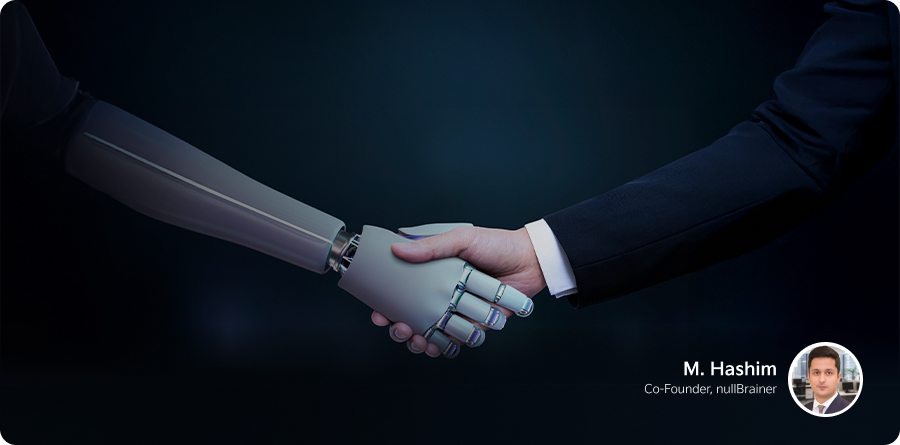
Will AI kill jobs? Who’s really at risk?
Lahore, Pakistan, 12 Sep, 2025 – As the founder of a software company, I often receive the same question: “Will AI take away jobs?” The short answer is NO, not in the way most people fear. AI will not simply erase jobs, but it will reshape how we work. It will shift responsibilities and demand new skills. The real risk is not about AI itself, it’s about people who fail to adapt.
Who’s at Risk?
AI isn’t here to replace every worker overnight. It will replace repetitive, low-skilled tasks that do not require extensive problem-solving. In the IT sector, automation is taking over roles that involve manual, repetitive work, basic testing, simple coding, or rote documentation.
The ones at risk are those who resist change. Also, those who fail to use AI to speed up their own work, and who lack strong fundamentals. Furthermore, smart people, with strong basics and the ability to learn, will thrive. The slow adopters? They’ll get left behind.
In short, AI doesn’t eliminate opportunities, but it magnifies differences in capability.
The Power of Prompt
A major misconception is that AI is “not competent.” People type a one-liner into ChatGPT and expect magic. But AI is not a mind reader; it’s a tool.
Think of it like assigning a task to a software engineer: if you give vague requirements, you’ll get vague results. The more detailed and clear your prompt is, the better the output. AI requires context, detail, and precision. Mastering prompts is not optional anymore; it’s a skill, one that can dramatically separate efficient professionals from average ones.
Be the Best in Your Niche
With new AI-powered tools launching every week, no-code platforms, “vibe coding” tools, and design assistants, it’s easy to get caught up in the fear of missing out.
Here’s the truth: most of these tools don’t live up to their hype, at least not yet (Q3, 2025). They’re helpful, but not transformative in the way marketing suggests. Instead of spreading yourself thin chasing every shiny new AI tool, focus on becoming the best in your niche.
Find an area you already work in, master it, and then leverage AI as an accelerator. Being a niche expert who knows how to integrate AI will always be more valuable than being a generalist overwhelmed by tools.
What the Future Holds (AI 2027 Predictions)
Routine tasks will be almost fully automated. However, new opportunities will emerge in:
● AI governance & ethics, ensuring responsible AI use
● AI tool integration, customizing AI for business workflows
● AI-assisted creativity, design, storytelling, and product innovation with AI support
● AI-human collaboration, roles where people use AI as an extension of their own capabilities
In other words: AI won’t take all jobs. It will shift which jobs matter most. AI’s trajectory will shape the fate of humanity, with both existential risks and unprecedented opportunities.
The Conclusion: Adapt or Fade
AI is not the enemy of workers, but it’s a filter. It rewards adaptability, curiosity, and strong fundamentals. It punishes complacency and weak skills.
The future belongs to those who can learn, adapt, and integrate AI into their craft. If you can master your niche and treat AI as your co-pilot, not your competitor, you’ll not only survive this shift, you’ll thrive in it.
